So while I was researching for next project; creating 5 book covers due next wednesday. I'm doing a book cover based on Design Aesthetic Philosophy (or design philosophy, basically what I write about). I came across a philosopher whom I haven't heard of; Prof. Arnold Keyserling. He was all about brain coherence and the grammar of the brain. To me, Graphic Design is thinking made visual... that's the definition I go by (while I realize GD has many definitions this is one I found that is most appropriate). I found his use of the enneagram; the nine-pointed star very interesting.
Keyserling discovered that the structure of our brain molds our speech, and our speech in turn shapes our mind. He found that the basic patterns of our mind and coherence are tied to language, and all are tied to the Enneagram and The Wheel. The essential criteria of our mind can be reduced to the three space-like realms of language combined with the four time-like functions. These are the basic components of The Wheel. (source)
Why do I sense that I may need to do this for a package design project in the near future? :P Gotta make sure to get paint thinner before I go back to school.
Easy Homemade clay, all you need is newspaper and wallpaper paste.
This is the easiest and cheapest recipe for paper clay.
Steps:
1. Get your newspaper 2. Soak it in water. 3. Tear it into strips. Into a bucket 4. Put more water in it so it just barely covers the paper. 5. Stir it up using a dremmel tool blender, food processor or regular blender. 6. Blend it into a pulp 7. Transfer some pulp into another bucket. Poor more water into the 1st bucket and stir more. 8. Get a cotton (or mesh) bag and put pulp in it and strain it. 9. Take strained pulp and put into the 2nd bucket. 10. Take some wallpaper paste and sprinkle it onto pulp. 11. Stomp/Kneed pulp into a clay.
This technique has been the only technique that uses very little glue.
According to www.wallpaperinstaller.com Cellulose is common binder for a substitute for natural gums and a stabilizer in emulsions as well as a thickening agent. It can be simply created using NaOH (Sodium hydroxide) which dissolves the wood or cotton with an alkali.
Cellulose "Cellulose methyl ether, produced by treating cellulose from wood or cotton with an alkali, such as sodium hydroxide, followed by methyl chloride. The resulting product is a white granular solid, soluble in cold water but insoluble in hot water. In addition to being used as an adhesive, it is used as a thickening agent, as a substitute for natural gums, and as a stabilizer in emulsions." -from Bookbinding and the Conservation of Books Dictionary from the Conservation On-Line (COOL) website
"Methyl cellulose occurs as practically odorless and tasteless, white to yellowish-white granules or powder. The pH of a 1% w/v solution is in the range of 5.5 to 8.0. Its angle of repose is about 40 degrees to 50 degrees and it is hygroscopic. It swells and disperses slowly in cold water to form a clear-to-opalescent, viscous, colloidal dispersion. The viscosity is increased with increased concentrations. The viscosity decreases with increased temperatures to about 50 degrees to 60 degrees Celsius, where gel formation occurs. The thermogelation is reversible when the viscous solution reforms upon cooling." -from Wade A., Weller P.J. (eds) Handbook of Pharmaceutical Compounding.
In paperhanging, cellulose has the highest water content of any paste in general use (around 97%). It usually comes in a small box and is packaged as a white powder. It is mixed with cold water on the job and can be used with a variety of lightweight materials such as porous papers, grasscloth and silk. It's adhesion is mostly of the mechanical type. It leaves very little solids behind and is not suitable for many wallcoverings which require greater amounts of initial tack and holding power.
What does it take to transform a pile of old T-shirts into spectacular works of woven art? Just a spare hula hoop or embroidery hoop and the techniques we'll show you here. The oversize looms and easy-to-use loops of T-shirt fabric make these projects particularly appealing to beginning weavers. Learn the basic hoop weaving technique by crafting a colorful accent rug to brighten up a room. And if you want to take the weaving a little further, check out our basket and chair pad weaves
I think for my first apartment, I'm going to make it a live/work space. Possibly even have it in a studio space (it'll be cheaper)... this idea for a bed just amplified that desire.
I want to see if I can try this on the big format printer. It would be cool if I could print textile designs with it. Not sure how well it'll load into the printer though.
I want to use the above finish. I'm thinking about making furniture out of paper pulp. I can't help but imagine it would have an interesting effect since paper is made from trees.
Although I think I would have to seal it some how after to keep it from warping.
If I get the furniture looking great out of paper pulp, the next thing I'd like to try is to make a boat of it. Since we're getting a beach house and all, it'll be fun to see if I can pull it off.
I'm a person who likes to dream ahead. Posting things that inspire me in all categories. I love interior design and plan on making my first studio looking like dynamite :P
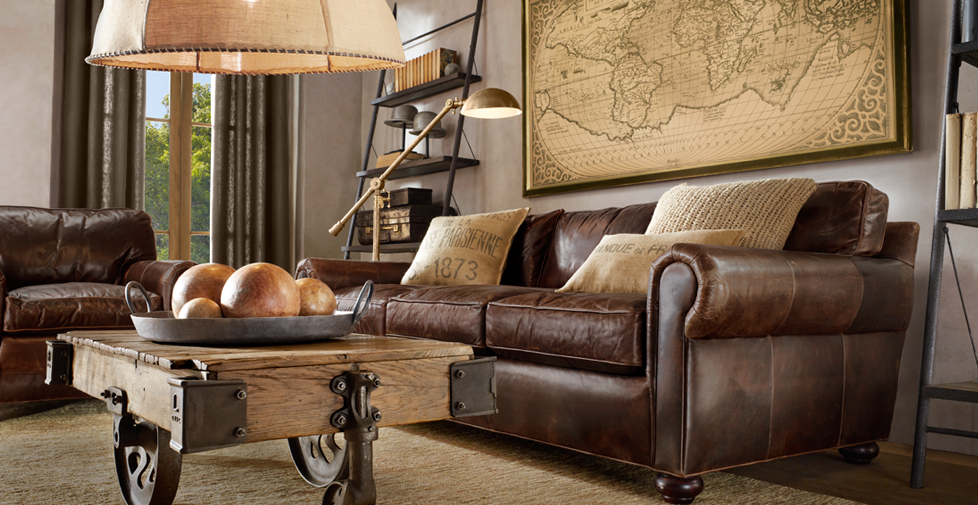
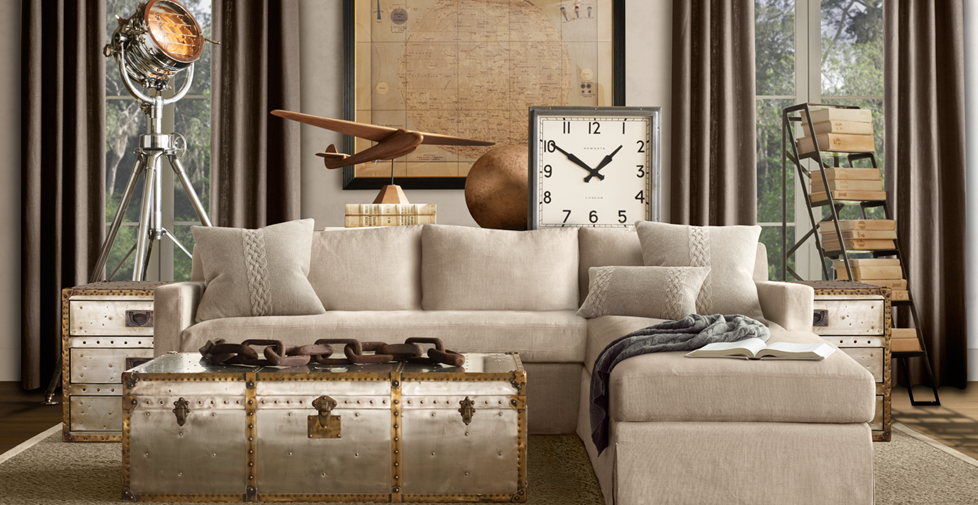
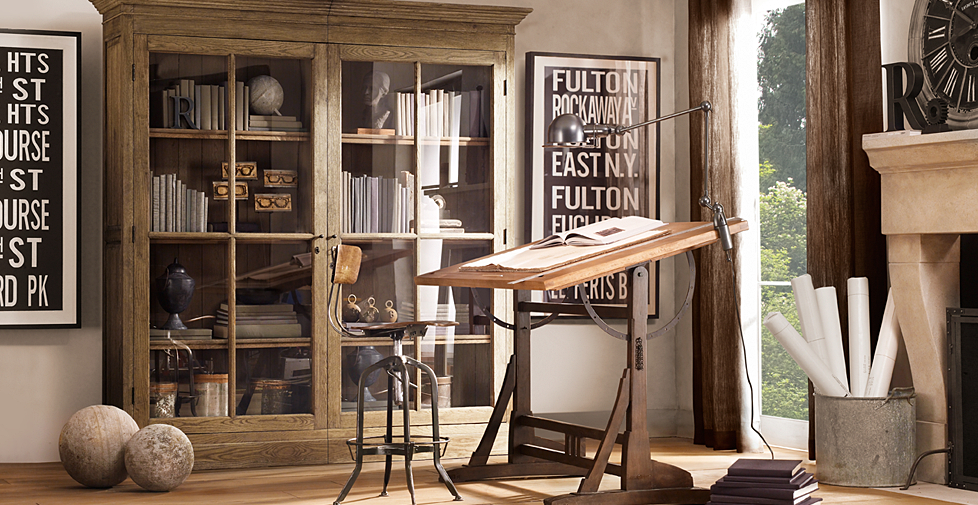
So here goes my new post series of interior design inspiration. I'm looking for something usually in between 16th and 17th century and modern/relatively futuristic inspirations.
Here is some inspirations I've found lately that is kind of what I'm after.
If I were ever to dye my hair a crazy color (which I might once I don't see my parents as often they're pretty conservative) I'd dye it white and then probably orange. But hair dying will only depend on where I end up for a job, of course.
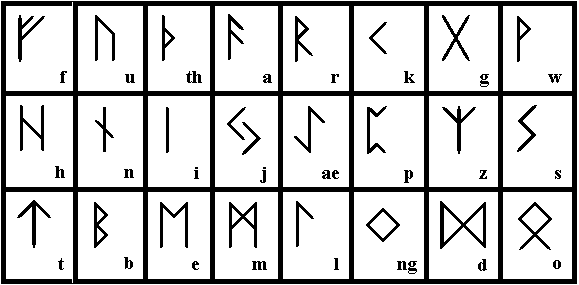
So thanks to my wonderful mom, she got me a new set of rune stones! Classic ones too! Mine are exactly like the picture above.
The Runic Alphabet, also called Futhark, writing system of uncertain origin used by Germanic peoples of northern Europe, Britain, Scandinavia, and Iceland from about the 3rd century to the 16th or 17th century AD. Runic writing appeared rather late in the history of writing and is clearly derived from one of the alphabets of the Mediterranean area. Because of its angular letter forms, however, and because early runic inscriptions were written from right to left like the earliest alphabets, runic writing seems to belong to a more ancient system.
Scholars have attempted to derive it from the Greek or Latin alphabets, either capitals or cursive forms, at any period from the 6th century BC to the 5th century AD. A likely theory is that the runic alphabet was developed by the Goths, a Germanic people, from the Etruscan alphabet of northern Italy and was perhaps also influenced by the Latin alphabet in the 1st or 2nd century BC.
Two inscriptions, the Negau and the Maria Saalerberg inscriptions, written in Etruscan script in a Germanic language and dating from the 2nd and 1st centuries BC, respectively, give credence to the theory of Etruscan origins for runic.
There are at least three main varieties of runic script: Early, or Common, Germanic (Teutonic), used in northern Europe before about 800 AD; Anglo-Saxon, or Anglian, used in Britain from the 5th or 6th century to about the 12th century AD; and Nordic, or Scandinavian, used from the 8th to about the 12th or 13th century AD in Scandinavia and Iceland.
After the 12th century, runes were still used occasionally for charms and memorial inscriptions until the 16th or 17th century, chiefly in Scandinavia.
The Early Germanic script had 24 letters, divided into three groups, called ættir, of 8 letters each. The sounds of the first six letters were f, u, th, a, r, and k, respectively, giving the alphabet its name: futhark. The Anglo-Saxon script added letters to the futhark to represent sounds of Old English that did not occur in the languages that had used the Early Germanic script.
Anglo-Saxon had 28 letters, and after about 900 AD it had 33.
There were also some slight differences in letter shape.
The Scandinavian languages were even richer in sounds than Old English; but, instead of adding letters to the futhark to represent the new sounds, the users of the Nordic script compounded the letter values, using the same letter to stand for more than one sound--e.g., one letter for k and g, one letter for a, æ, and o. This practice eventually resulted in the reduction of the futhark to 16 letters.
Other varieties of runes included the Hälsinge Runes, the Manx Runes, and the stungnar runir, or "dotted runes," all of which were variants of the Nordic script. More than 4,000 runic inscriptions and several runic manuscripts are extant.
Approximately 2,500 of these come from Sweden, the remainder being from Norway, Denmark and Schleswig, Britain, Iceland, various islands off the coast of Britain and Scandinavia, and other countries of Europe, including France, Germany, Ukraine, and Russia.
Futhark actually is analogous to our "alphabet", in that f,u, th, a, r, and k are the first 6 Runic letters, while alpha and beta are the first 2 Greek letters. This order must have had some mneumonic function that was not preserved. (Just like why aleph, beth, and gimmel are the first 3 letters in Phoenician/Ugaritic).
There is an esoteric side to everything, no doubt. That is why I like this school of thought.
Some say script is just the effect of primitive writing. Calligraphy was just a primitive writing style and things developed after the printing press into the print penmanship we know of today.
But one must ask, what made us use flowing inky lines? What in our subconscious told us that flowing lines were easier than architectural letters?
Some say is has to do with the flow of energy and some say it is actually the manifestation of our thoughts (which is light with sound attached).
The artist, Bryan Deflores says about his work: The channeled art pieces/accelerators contained within these galleries are designed to trigger a dramatic reconfiguration of our consciousness; assisting us to return to our original blueprints of divine perfection and connection. Although many of these images are intense and highly complex, it is important to understand that their primary purpose is to connect you with the new thought fields currently merging with our planetary matrix. All image originals are drawn ‘by hand’ in a matter of minutes and are often created several at a time. To manifest these art pieces, I use Prismacolor pencils and/or gold and silver metallic markers on Canson drawing paper.
THE GRIDWORKERS #74 5th dimensional Arcturian lightships assisting in healing and activating the planetary grid system. Vanadinite.
THE SCIENCE OF MIRACLES #71 Original innocence shifts the body consciousness into experiencing more joy and reverence for all of creation; divine creativity. Rhodochrosite
DIE EGO, DIE #67 Aboriginal Dreamtime Accelerator This image organizes the true inner management principals of the mind while gently unraveling the ‘old’ Ego Structure. Your strategies will falter and fail as this accelerator brings all inner conflicts to a halt.
PERCEPTIONTATION #73 Aboriginal Dreamtime Accelerator Serendipitous reunion; a portal into an unexplored dimension now ready to be explored; eliminates prejudice of off-planet creational processes; Higher Self bridge for accessing information of & to the Self; assists one with objective witnessing & infinite perspective.
THE VRIL POWER #75 Activates all energy centers in the body; also called the Kundalini Energy, each individual’s personal power located at the base of the spine; liquid light acceleration fluid. Sugelite and Carnelian.
PILLARS OF HERCULES #5 Manifests divine intervention; calls forth the ‘Power of the Gods’; harmony and balance; strength and courage; support & empowerment.
THE TITAN #62 Seven ships united, bringing the program for rebalancing Earth; ancient shield of protection to impact the current morphogenetic field, allows transcendence of time and space for co-creation; redistributes commonalities throughout the grid.
ETERNAL LIGHT #35 Spark of creation; divine custodian; ignites a chain reaction of sustained light within the physical body; designed by the Progress Helpers and the Superangels.
Depending on your view of channeling (I prefer the word 'transmission') these can have a very powerful effect spiritually but are also a good source of design inspiration.